Why Many Dementia Patients Have More Than One Brain Disease
Dementia research is changing in a major way. For years, doctors treated conditions like Alzheimer’s disease and Parkinson’s disease as separate illnesses with distinct causes. New findings now show that many patients carry signs of several brain disorders at the same time.
This overlap, known as copathology, is reshaping how scientists understand memory loss, cognitive decline, and treatment response.
Neuropathologists first noticed this pattern about two decades ago while studying autopsied brains from dementia patients. Many brains showed evidence of more than one disease process.
Since then, studies have revealed that up to half of people diagnosed with Alzheimer’s also carry alpha-synuclein deposits, a protein linked to Parkinson’s disease. At the same time, nearly half of Parkinson’s patients who later develop dementia also show high levels of beta amyloid and tau proteins, both considered defining features of Alzheimer’s.
Researchers now believe these overlapping diseases may explain why dementia symptoms vary so widely from person to person.
Why Copathology Matters
The discovery of copathology challenges the traditional way neurodegenerative diseases are classified. Most diagnoses still depend on one “signature” protein. Alzheimer’s focuses on amyloid and tau. Parkinson’s centers on alpha-synuclein. Frontotemporal dementia often involves TDP-43.
Real-world cases rarely stay inside those boundaries.
Neuropathologist Lea Grinberg discussed this issue during the Alzheimer’s and Parkinson’s Diseases Conference in March. According to Grinberg, copathology helps explain why symptoms and biomarkers often fail to match. It may also clarify why cognitive decline progresses quickly in some patients while others decline more slowly.
“It seems that they stimulate each other,” Grinberg said while discussing the interaction between disease proteins inside the brain.
The growing awareness around mixed pathology is also raising concerns about current treatments. Some patients receiving anti-amyloid drugs for Alzheimer’s do not respond as expected. Researchers suspect additional brain diseases may influence those outcomes.
Age Increases the Odds of Mixed Brain Disease
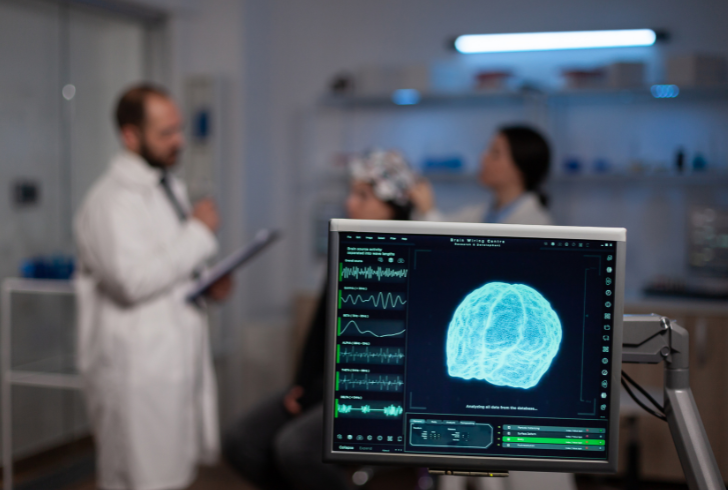
Freepik | DC Studio | Dementia research is shifting as scientists realize different brain disorders often overlap in the same patient.
Doctors now see copathology as extremely common in older adults. Neurologist David Wolk said, “Almost no one has only one pathology in the brain when they get to be 80.”
Last year, Wolk and colleagues published clinical criteria for a condition called Limbic-predominant age-related TDP-43 encephalopathy, often shortened to LATE. The disease appears frequently in people over 85 and involves the buildup of TDP-43 protein, which is also linked to some forms of frontotemporal dementia.
Still, mixed pathology is not limited to older adults.
One study involving familial Alzheimer’s patients who developed dementia in their 40s found that half also had Lewy bodies in the brain alongside Alzheimer’s pathology. Research presented at this year’s AD/PD conference added another layer to the discussion.
Neurologist Tom Tropea reported that people in the early stages of Parkinson’s disease showed elevated p-tau217 levels, a blood marker tied to Alzheimer’s pathology. Patients with higher p-tau217 levels experienced faster cognitive decline and stronger reductions in daily functioning.
Diagnostic Tests Aim to Detect Multiple Diseases
Most copathologies are still discovered after death or through specialized research programs. Scientists now want to identify these overlapping diseases earlier and in living patients.
One emerging tool comes from Amprion Diagnostics. The company developed a spinal fluid test capable of detecting Parkinson’s disease, dementia with Lewy bodies, and related disorders.
According to Amprion CEO Russ Lebovitz, broader use of these tests could help more patients qualify for clinical trials focused on mixed pathologies.
Researchers are also developing advanced blood tests designed to capture several disease signals at once.
Neurologist Richard Mayeux is working on a test based on extracellular vesicles. These microscopic particles carry proteins released by cells, including neurons. By analyzing neuron-derived vesicles in blood samples, scientists can detect markers associated with Alzheimer’s disease, Parkinson’s disease, LATE, and blood vessel-related brain disease.
Another experimental test came from Carlos Cruchaga at Washington University in St. Louis. His team created a blood test using 15 protein markers combined with artificial intelligence analysis.
The test can reportedly distinguish major dementia-related pathologies and estimate their proportion inside the brain.
“It can tell you, you have 75% Alzheimer’s pathology and 20% Parkinson’s pathology and 5% frontotemporal dementia,” Cruchaga explained.
The blood panel still requires real-world validation and cannot yet predict disease in healthy individuals without symptoms.
Can One Drug Treat Multiple Brain Diseases?
Current treatment options remain limited. Only antibody drugs designed for Alzheimer’s disease can actively remove disease-related proteins from the brain.
Doctors still do not know whether these therapies help patients with mixed pathologies. Some people with dementia with Lewy bodies also carry high amyloid levels, making treatment decisions difficult.
Wolk noted that some patients may still choose anti-amyloid drugs despite uncertain results. “Can we really say that it’s not going to help them to at least remove the thing that you can remove?” he asked.

Freepik | Future dementia treatment will likely rely on combining Alzheimer’s, Parkinson’s, and frontotemporal drugs.
A major clinical trial expected to begin later this year will test that question directly. The study plans to evaluate Donanemab in patients with early dementia with Lewy bodies who also show elevated amyloid in the brain.
Neurologist Sharon Sha, one of the lead investigators, believes beta amyloid and alpha-synuclein may work together to accelerate damage inside the brain.
Sha hopes the trial demonstrates both clinical benefits and a broader shift in research design. “Helps the field to recognize the importance of being inclusive of copathology in clinical trials,” she said while discussing the study’s goals.
A New Direction for Dementia Care
Scientists increasingly believe dementia treatment may eventually involve combination therapies. Patients could receive Alzheimer’s drugs alongside treatments developed for Parkinson’s disease or frontotemporal dementia.
Others think future therapies may target shared biological pathways that trigger several diseases at once instead of focusing on one protein at a time.
Mark Frasier from the Michael J. Fox Foundation for Parkinson’s Research said large-scale studies are already tracking these overlapping conditions to better understand how they interact.
“The ultimate goal is to define these diseases based on the biology, and understand the occurrence of these pathologies across the spectrum of diseases,” Frasier explained. “I do think this is where the field is headed.”
Neuropathologist Johannes Attems believes future dementia care may move beyond rigid disease labels entirely.
Rather than diagnosing a patient with a single disorder, doctors may eventually measure the exact amounts of amyloid beta, tau, alpha-synuclein, and TDP-43 present in the brain and treat each pattern directly.
“You see a patient and in his brain is so much amyloid beta and so much tau, so much alpha synuclein, so much TDP-43. That’s it,” Attems said. “And you have something to give him.”