Carlo Petrini, Founder of Slow Food, Dies at 76 in Italy
Carlo Petrini, the founder of the global Slow Food movement, passed away on Friday at the age of 76 in his hometown in Italy’s northwestern Piedmont region. His work reshaped conversations around food, culture, and sustainability across more than 160 countries.
Slow Food described him as “a visionary leader and a public intellectual with a profound commitment to the common good, human relationships and the natural world.”
The movement began as Arcigola in response to the rise of fast food culture in Italy. A defining moment came in 1986, when supporters protested at the steps of the newly opened McDonald’s near Rome’s Spanish Steps, marking a public stand for local food traditions and quality eating.
On December 9, 1989, Petrini was elected president in Paris, where over 20 international delegations signed the Slow Food Manifesto. He held this position until 2022, guiding the movement’s steady global expansion.
At its core, Slow Food promotes the principle that food should be “good, clean and fair.” Restaurants aligned with these values display the Snail of Approval, a symbol of the organization’s philosophy.
Global Projects and Educational Impact
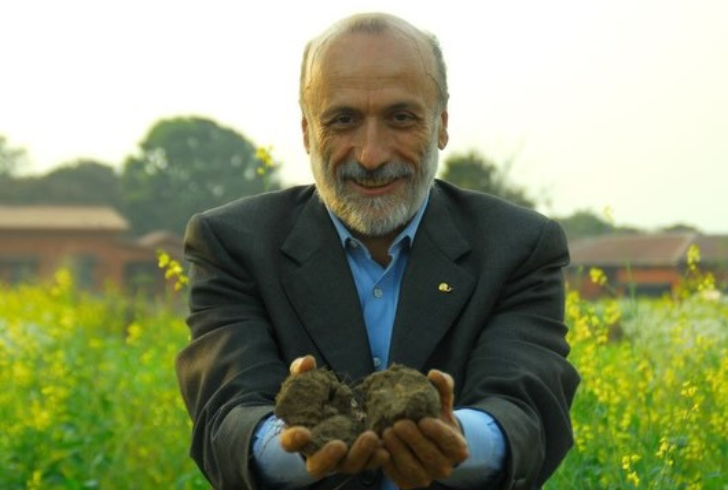
Instagram | @petershamnurseries | Carlo Petrini’s simple philosophy inspired millions to support sustainable food and local traditions.
In 2004, Petrini helped establish Terra Madre, a network connecting farmers, fishers, chefs, and academics to support food communities worldwide. He later co-founded the University of Gastronomic Sciences in northern Italy, the first institution focused on food culture as a multidisciplinary field. Since its creation, it has trained around 4,000 professionals from 100 countries. In 2017, Italy officially recognized gastronomic sciences with a bachelor’s degree.
That same year, Petrini launched Laudato Si’ Communities with Bishop Domenico Pompili, forming nearly 80 local groups inspired by Pope Francis’ environmental teachings.
His writings include “Slow Food Nation: Why Our Food Should Be Good, Clean and Fair” and “Slow Food: The Case for Taste,” featuring a foreword by Alice Waters, a key figure in the farm-to-table movement.
Petrini’s work continues to shape food ethics, education, and sustainable practices, leaving a framework that connects people, land, and tradition through everyday meals.