Why Families in Venezuela Are Struggling to Put Food on the Table
Across Venezuela, families are caught in a relentless struggle to put food on the table. For many households, even the simplest meals have become a luxury. In the western city of Coro, 51-year-old Alnilys Chirino faces this harsh reality every day. Her refrigerator contains little more than a few peppers, herbs, rice, beans, and a small amount of canned meat. These supplies rarely last more than a few days, yet they must sustain her three teenagers who live, study, and often go to bed hungry.
Her family’s story mirrors the lives of millions. Decades of economic decline, international sanctions, shrinking foreign aid, and cuts to state subsidies have left nearly 80% of Venezuelans living in poverty. While housing, medicine, and electricity are all affected, the most urgent need is food.
The Impact of an Economic Freefall
Falcon State, once a hub of oil refinery jobs, now stands as a symbol of how the crisis reshaped daily life. Residents describe how everything revolves around food — where to find it, how to pay for it, and how long it might last.
Experts warn that while Venezuela may not face famine on the scale of other global crises, severe food insecurity has already left lasting damage. Children in particular face malnutrition that can cause stunted growth, chronic illness, and long-term developmental setbacks.
One local pediatrician, Dr. Huniades Urbina, explained that the government’s ban on recording malnutrition in medical files makes it difficult to track the true scale of the problem. “You can see the hunger in their faces even if it’s not written in hospital records,” he noted.
Maduro’s Policies and Shuttered Kitchens
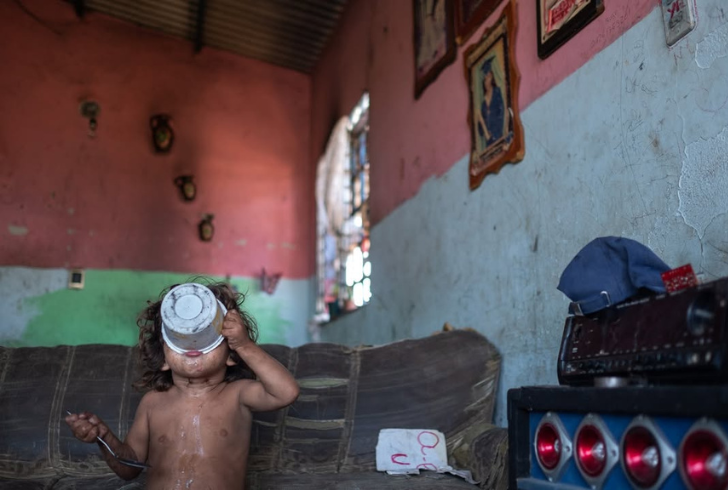
Instagram | @alessandro_stefanelli | A hungry child drinks from an empty container as food shortages reshape daily life in Falcon State.
Food availability is severely restricted under President Nicolás Maduro, who was inaugurated in spite of ample evidence of irregularities in the election. Hyperinflation has slashed wages to pennies, and new regulations on nongovernmental organizations have forced many soup kitchens and aid programs to close.
Faith-based leaders also see the impact firsthand. Reverend Gilberto García, who helps run a church soup kitchen, noted, “People can still eat, but what they eat is mostly starches and carbs. Protein is becoming a rare item.” His statement highlights how the quality of nutrition has deteriorated, leaving families to rely heavily on rice, beans, and flour.
Children Bearing the Heaviest Burden
The collapse of Venezuela’s school lunch program has made matters worse. By law, students should receive a free daily meal, but teachers across the country confirm this has not been the case for years. As a result, children skip classes when hunger leaves them too weak, and some faint while studying.
Teachers like Deyanira Santos describe heartbreaking moments. “Some kids ask for second or third servings, not because they are greedy but because they have nothing at home,” she explained. Santos added that she often packs leftovers for students who shyly ask if they can take food to their families.
Animal protein, once a routine part of the Venezuelan diet, has become rare. Health experts warn that this shift accelerates health problems such as headaches, fatigue, and stunting in children. Families acknowledge this daily reality. Chirino’s children complain of constant headaches — a sign she directly links to their poor diet.
Living on Bread and Sugary Drinks
For breakfast, Chirino’s son Juan manages only three bread rolls soaked in a sugary drink. It counts as a small treat, since the family often has nothing but tap water. He considers himself lucky if he wakes without a headache, unlike his brother José, who stays in bed when the hunger becomes unbearable.
This breakfast scene highlights how quickly inflation has eroded purchasing power. Venezuela’s minimum wage remains at about $0.90 a month — unchanged since 2022 — far below the international poverty threshold. With basic food baskets costing over $500, families survive only by skipping meals or relying on credit from local stores.
Midday Meals That Offer Little Relief
At lunch, Chirino serves her children rice and beans donated by her mother. It is filling but lacks the nutrients teenagers need. Her daughter Angerlis rushes through the meal to get to school, where classmates sometimes faint from hunger. Despite warnings from teachers to keep children home without food, many still attend, too desperate to miss even a few lessons.
Maduro’s government does supply schools with items like chicken, flour, and beans, but distribution is inconsistent and insufficient. When schools do receive deliveries, the aroma of cooking draws children from across the neighborhood, many of whom beg for seconds.
Stretching Every Bolivar
Chirino tries to supplement her income by selling secondhand clothes and linens, but she earns only around $70 a month, plus a government stipend of about $4. Every cent goes to food. With soaring inflation, even this small income loses value almost immediately.
Most families turn to corner stores where they can buy food on credit. Store owner Diego Reverol explained, “We let neighbors take what they need and pay us back when they get their stipend. It’s the only way many can manage.” Grocery store trips are rare luxuries.
Vanishing Aid and Fewer Options
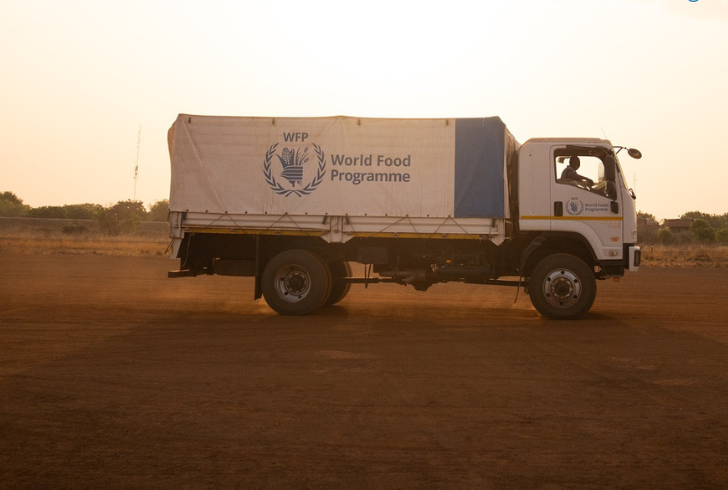
Instagram | @ worldfoodprogramme | The WFP provides meals rations and medicine yet families in Venezuela still face hard choices as support becomes scarce.
The World Food Program (WFP), which once provided school meals and distributed rations, has also scaled back operations due to global funding shortages. Families like that of Yamelis Ruiz, whose daughter requires expensive medical care, feel the loss keenly. “Now it’s food or medicine. I can’t buy both,” Ruiz said, her words reflecting the impossible choices many parents face.
The reduction in international support, coupled with government restrictions on nonprofits, has left communities with even fewer lifelines.
Finding Solace in Faith-Based Support
In Coro, one of the few remaining sources of support is the local Catholic church. Each weekend, it provides free meals for children and families, and attendance is growing as hunger deepens.
At one lunch, more than 70 children quickly filled their plates with arepas stuffed with ground beef and plantains. Within minutes, many returned to the counter for leftovers. A volunteer described children stretching on tiptoes, hands raised, hoping to receive another portion.
Acts of kindness still shine through. One boy shared his untouched arepa with a friend who had none, splitting it evenly. Yet these gestures underscore just how little food is available.
The Weight of Hunger
Chirino often refuses food at the church so more children can eat. On one occasion, volunteers insisted she take an arepa after most had been served. She reluctantly began eating, only for her son José to join her, hungry enough to take half from her plate. It was a quiet reminder that even the small relief provided by church kitchens cannot meet the overwhelming need.
Hunger has become an all-consuming challenge in Venezuela, dictating daily routines, limiting education, and weakening health. Experts agree that without sustained international assistance and significant policy changes, the crisis will continue to shape an entire generation.
A Nation Searching for Relief
The Venezuelan people have shown resilience through years of hardship, but resilience alone cannot fill empty plates. The stories from Coro illustrate how deeply food insecurity cuts into family life, education, and health. Each mealtime is no longer a routine but a battle for survival.
Despite shrinking aid and collapsing wages, communities continue to share what little they have, offering proof of solidarity in the face of adversity. Yet the question remains: how long can families stretch meager supplies before the burden becomes unbearable?
Until policies shift and reliable aid returns, millions will continue to measure life in bowls of rice, bread rolls, and fleeting moments of relief from hunger.